









Outdoor lighting design has traditionally been evaluated based on brightness, coverage, and energy efficiency. However, recent research highlights that light influences far more than visibility alone. It directly affects visual perception, circadian regulation, psychological comfort, and environmental balance.
The concept of human-centered lighting (HCL) emerged from the need to align artificial lighting systems with the natural dynamics of daylight, which changes in intensity, color temperature, and spectral composition throughout the day. Unlike daylight, artificial lighting-especially outdoor artificial light at night (ALAN)-is often static and can disrupt biological rhythms if poorly designed.
Research increasingly emphasizes that responsible outdoor illumination must consider not only visual performance but also human health and ecosystem impact.
Outdoor Artificial Light at Night (ALAN) and Human Health
Scientific literature examining Artificial Light at Night (ALAN) indicates that prolonged exposure to blue-rich, high-intensity outdoor lighting can influence sleep cycles and biological rhythms.
A comprehensive literature review published in ScienceDirect notes that nighttime artificial lighting may affect sleep patterns, hormonal balance, and behavioral responses in humans (Source: ScienceDirect – Effects of outdoor artificial light at night on human health and behavior).
This growing body of research does not suggest eliminating outdoor lighting but rather improving how it is engineered.
- Professional outdoor lighting design therefore requires:
- Controlled spectral output
- Appropriate color temperature selection
- Reduced glare and light trespass
- Balanced illumination levels
At Yakan Lighting, outdoor illumination systems are developed with controlled optical distribution and balanced output, ensuring that light serves its purpose without unnecessary environmental stress.
Visual Perception Under Low Light Conditions (Mesopic Vision)
Understanding how humans see at night is critical for landscape lighting systems.
Under low illumination levels, the human eye operates in what is known as the mesopic vision range, where both rods and cones contribute to perception (Source: Mesopic Vision – visual science literature). In this state:
- Contrast perception becomes more important than brightness
- Excessive glare significantly reduces visual comfort
- Uniformity improves spatial awareness
- This means that simply increasing brightness does not improve safety or comfort. In fact, poorly shielded luminaires can reduce visibility by creating contrast imbalance.
Professional garden lighting must therefore prioritize: - Beam control
- Optical precision
- Glare reduction
- Balanced luminance distribution
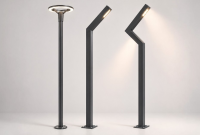
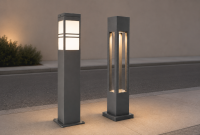
At Yakan Lighting, luminaires are engineered to direct light precisely where needed on pathways, architectural elements, and landscape features without overwhelming surrounding areas.
Outdoor Lighting, Pedestrian Comfort, and Spatial Awareness
A study published in MDPI (Buildings Journal) highlights that lighting quality influences:
- Facial recognition distance
- Perception of obstacles
- Psychological sense of safety
- Walking comfort in public spaces
- (Source: MDPI – Outdoor lighting and pedestrian visual perception study)
The research indicates that vertical illumination and light distribution are as important as horizontal lux levels. This is especially relevant in professional landscape lighting systems where users interact dynamically with the space.
For this reason, professional outdoor lighting should focus on layered illumination:
- Ambient spatial clarity
- Task oriented pathway lighting
- Accent lighting for hierarchy and depth
- This layered approach enhances comfort without increasing energy consumption unnecessarily.
Sustainability and Human-Centric Design
Another study published in MDPI Sustainability links human-centric outdoor lighting to broader sustainable development goals (Source: MDPI – Human-centric outdoor lighting and sustainability).
The research emphasizes that well-designed outdoor lighting must:
- Reduce light pollution
- Limit upward light spill
- Minimize ecological disruption
- Maintain human well-being
This aligns directly with international guidance from organizations such as CIE regarding responsible outdoor illumination practices.
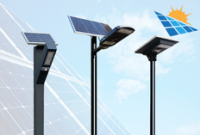
At Yakan Lighting, sustainability is addressed not only through energy efficiency but through controlled optical design and system durability. Our solar and LED outdoor lighting solutions are engineered to reduce excessive output, avoid deep battery discharge cycles, and extend operational lifespan supporting both environmental and human-centered principles.
Glare, Psychological Comfort, and Perceived Safety
Human comfort is not determined by illuminance alone. Psychological perception plays a crucial role.
Studies show that:
- Excessively bright lighting can create discomfort rather than safety
- Poorly controlled beams reduce visual clarity
- Balanced, uniform illumination improves confidence and spatial perception
- Human-centered outdoor lighting therefore requires restraint, not excess.
- Professional garden lighting is not about increasing lumens,it is about creating visual harmony.
At Yakan Lighting, outdoor lighting investment means designing systems that maintain:
- Controlled brightness
- Optical precision
- Long-term stability
- Environmental responsibility
Conclusion: Engineering Light for People
Human-centered outdoor lighting represents a shift from product-focused thinking to system-based design.
Modern professional landscape lighting systems must integrate:
- Visual science
- Biological awareness
- Sustainability principles
- Technical precision
As research on ALAN, mesopic vision, and pedestrian perception continues to evolve, the industry is moving toward engineered outdoor lighting solutions that prioritize comfort, health, and environmental balance.
With over 60 years of manufacturing expertise and internationally certified production standards (TS EN 40-5, ISO 9001:2015, ISO 10002:2018), Yakan Lighting approaches outdoor illumination as a responsible engineering discipline—where light supports people, spaces, and ecosystems alike.
References
Effects of outdoor artificial light at night on human health and behavior – ScienceDirect
Mesopic Vision – Visual science research literature
Outdoor lighting and pedestrian visual perception – MDPI (Buildings Journal)
Human-centric outdoor lighting and sustainability – MDPI Sustainability
Marmara University – Human-centered lighting thesis research